
After our short but enjoyable stint on the Animal Team we were able to join the Sloth Team. This was Elizabeth’s main reason for choosing this rescue centre as they have a sloth team dedicated to the rehabilitation of sloths, in particular baby sloths, and releasing them back into the wild as soon as possible.
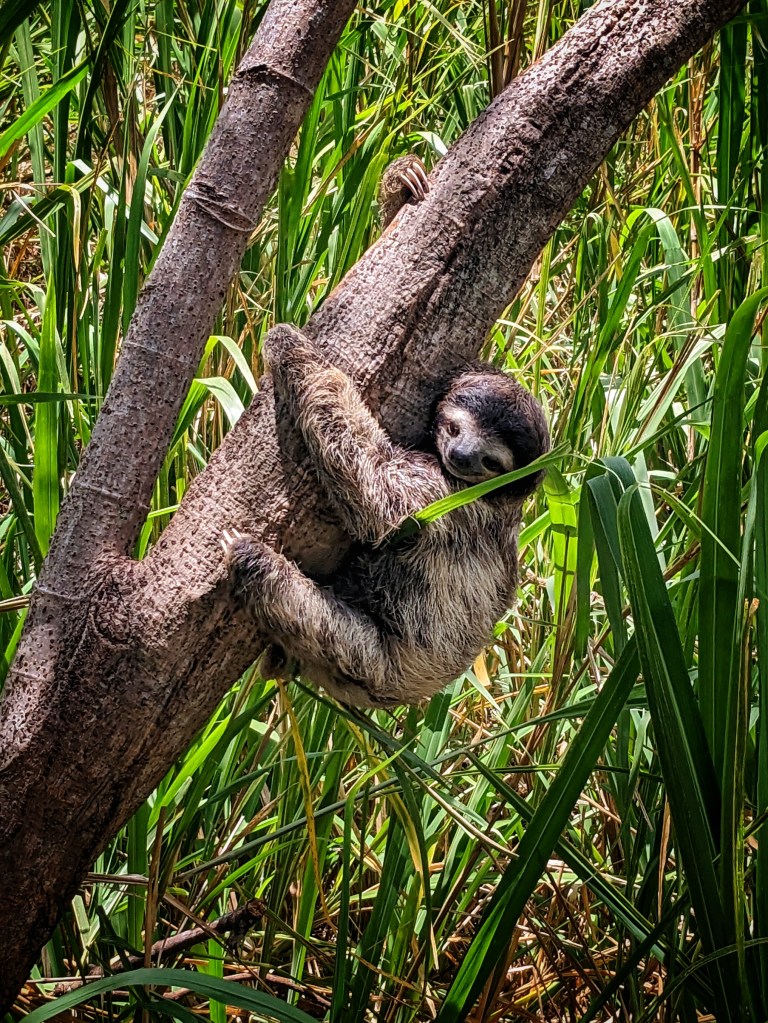
We have learnt a lot about these very different animals while working on the sloth team. The sloth’s natural habitat is the forest, the trees specifically, where they hang out in the high branches while sleeping for about 20 hours a day. Sloths predominantly eat certain types of leaves, and have the slowest digestion system of any mammal. It can take them 11 to 30 days to fully digest a meal, so in an effort to conserve energy, sloths have evolved to do less rather than eat more. Warwick is fully on board with this kind of lifestyle…
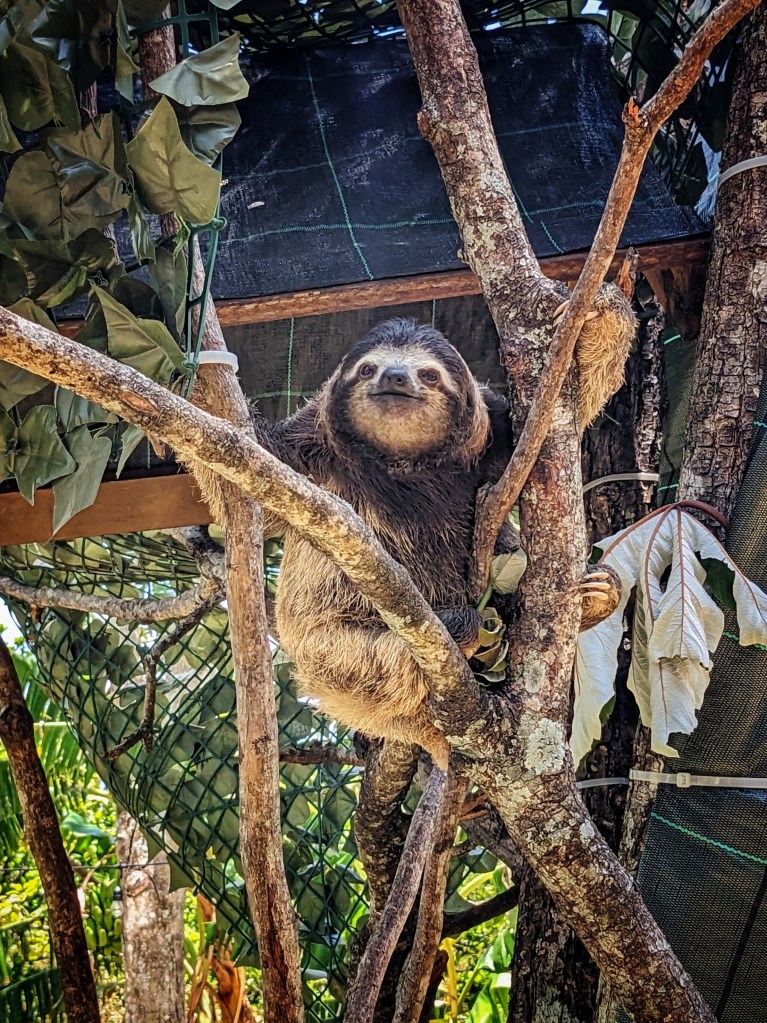
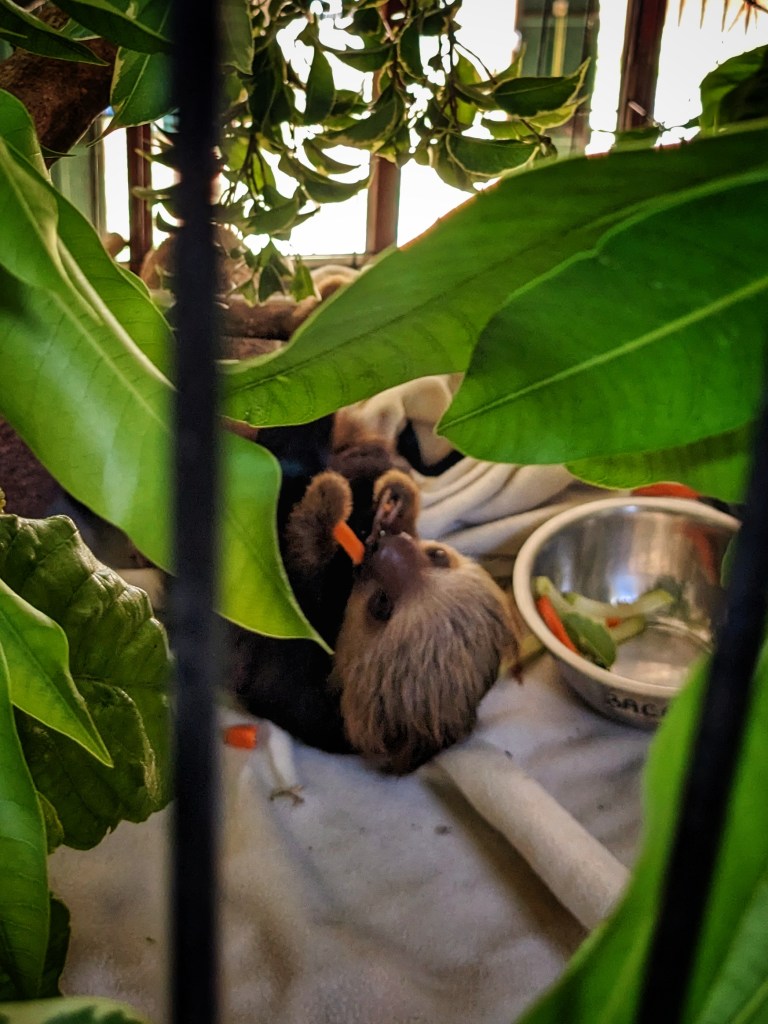
Two of the six worldwide species of Sloth live in Costa Rica; Hoffman’s two-toed sloths and the brown-throated three-toed sloths, and they are very different visually and in behaviour. The two-toed sloths are nocturnal, larger, are more active, and have a speedier movement. They have a white-ringed face, brown snout and shaggy coats with their hair colour ranging from champagne to buff to dark brown. In contrast, black eye patches and “smiling” mouths distinguish Costa Rica’s docile three-toed sloths. These sloths are much slower in growth and development, and have a slower metabolism. Their movement in general is also much slower, they are smaller in size and are diurnal.
Here at The Rescue Center we have been looking after both types of sloths native to Costa Rica. There are 23 Hoffman’s two-toed sloths and 2 Brown-throated three-toed sloths, of varying ages, this ratio is comparable with the wild as the smaller three-toed sloths are rarer here in Costa Rica. Each sloth is fully checked out by the vet team on arrival, placed in an enclosure and given a care plan suitable to their age and development, with the ultimate goal of releasing the sloth back into their natural habitat as soon as they are able to survive by themselves.
Work on the Sloth Team is split into two shifts, morning and afternoon, with the Team sharing just one shift each day. On the one hand this is much nicer than working on the Animal Team (who work morning and afternoon), but on the other hand, the sloth team morning shift starts at 6AM, and the afternoon ends at around 5PM but we then have to work a short night shift between 9 & 10 PM.
Our first introduction to the sloths was by our team coordinator, Jessie. She explained to us how we would be caring for the sloths over the coming weeks. Sloths are extremely sensitive animals and easily become stressed so to become a member of the sloth team, volunteers need to commit to a minimum of 10 days on the team. Another reason for this is that sloth care and handling is more complicated and precise than in the other animal teams. Once the work for the afternoon shift had been explained to us it was time to begin…
The routine for the PM shift is:
- Prepare and give the Sloths their afternoon snack; this can be be banana, cucumber, paypa or even scrambled egg
- Collect the breakfast bowls and weigh the left over vegetables so we can track how much each sloth is eating
- Lightly boil, and weigh out the two types of vegetable (previously chopped in the morning) for each sloth’s dinner
- Chop veggies for the AM feed
- Sloth-sitting
- Distribute dinner to the sloths
- Find, cut, and distribute new leaves of the right types for each sloth, to encourage them to eat as they would in the wild, and as ‘dressing’ for each enclosure, in a nice and natural manner
The routine for the night shift is:
- Collect the dinner bowls (this is done in the dark with torches and there are a lot of ants, so many ants! So long sleeves, trousers and gloves are very necessary)
- Weigh the left over vegetables from dinner and log the weight
We found that the general tasks are split into three’s; cleaning, feeding, and babysitting (Sloth-sitting!). The feeding also split into three; food prep, weighing, and leaves. And for Slothsitting, if they come down 3 times, we take them back to their enclosure (more on that later).
We spent the first afternoon and evening shifts feeling a little out of our depth with so much to learn. We found ourselves quite nervous the first few times we handled the baby sloths; in our minds the sloths were delicate animals whereas in reality, as we later learnt, they are strong, robust and most definitely have a mind of their own!
For now this is just the first sloth-post with the general overview. We will add more details on our 3 weeks in the sloth team, in the next post. For now, enjoy the photos below 🦥


 Travel, Nature & Us
Leave a comment