
On our first morning shift on the sloth team our alarm went off at 5:30AM (although not strictly needed as we are woken each morning as dawn breaks at around 5AM and from 4:30AM all the nature around is waking up, especially the parrots!). After finishing at 10PM the night before, we made our way bleary eyed to the vet clinic to get started.
The routine for the AM shift is:
- Clean out and disinfect the babies enclosures including all of the old leaves from the enclosures (babies live upstairs inside the vet hospital, and grown-ups outside)
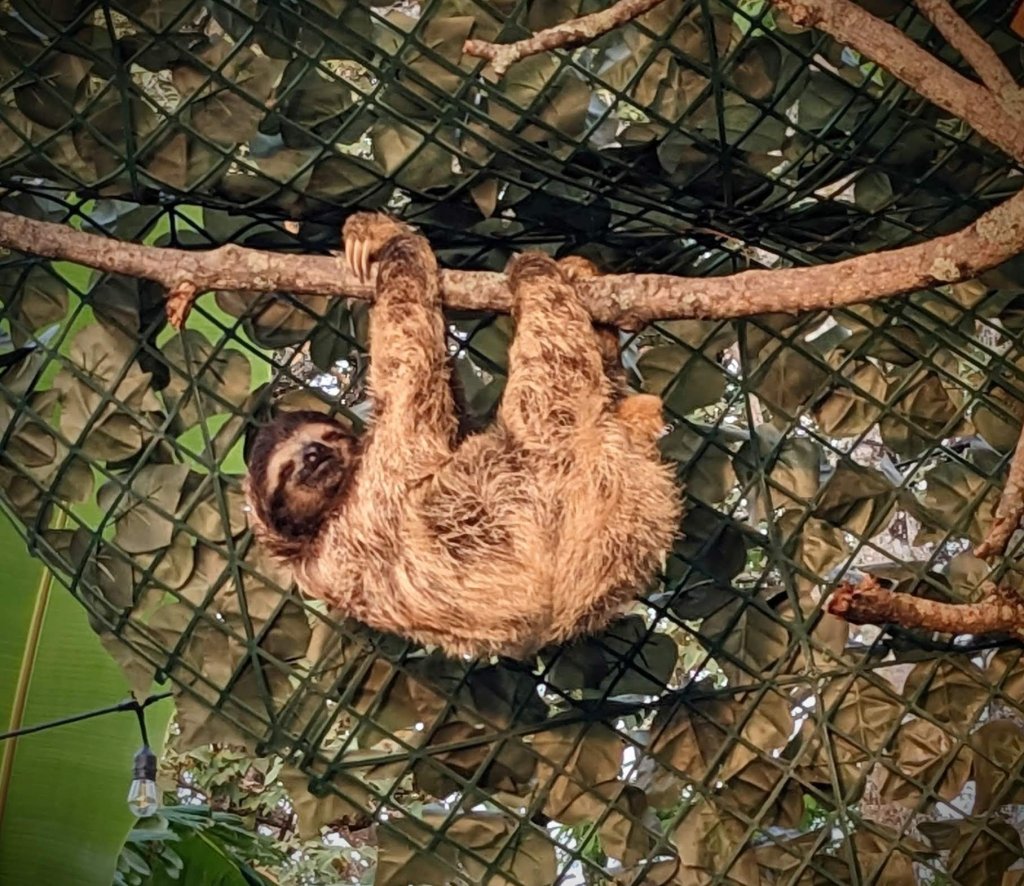
- Take out all the old leaves from the grown ups enclosures and brush/rake out any overnight poop from the floor (in the wild sloths will come down to ground level to poop & pee just once a week. This is due to their slow metabolism and that they are at their most vulnerable to predators when on the ground)
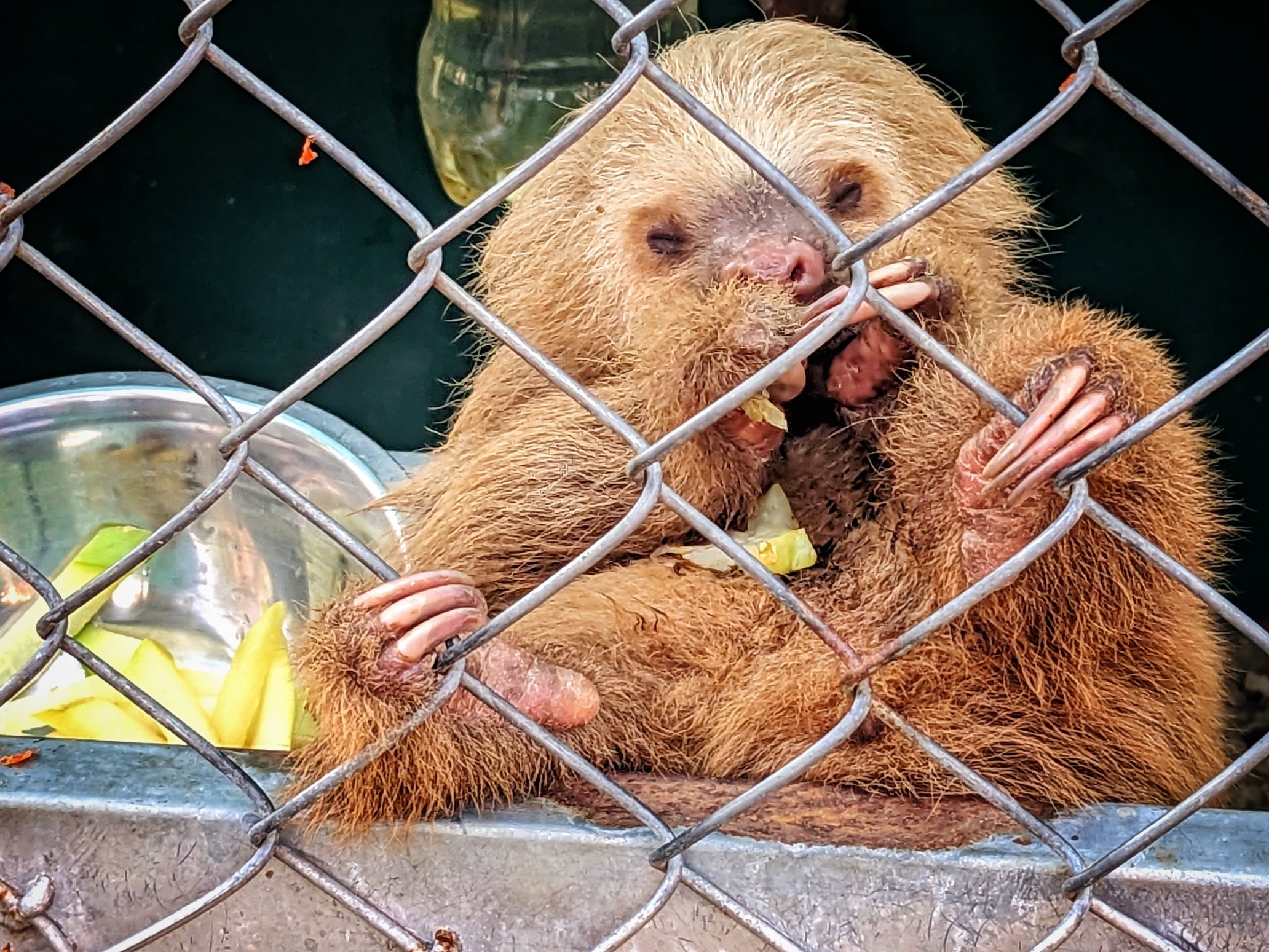
- Lightly boil, and weigh out the two types of vegetable (chopped the afternoon before) for each sloth – they all have their names on their bowls to track who eats what. Then distribute breakfast
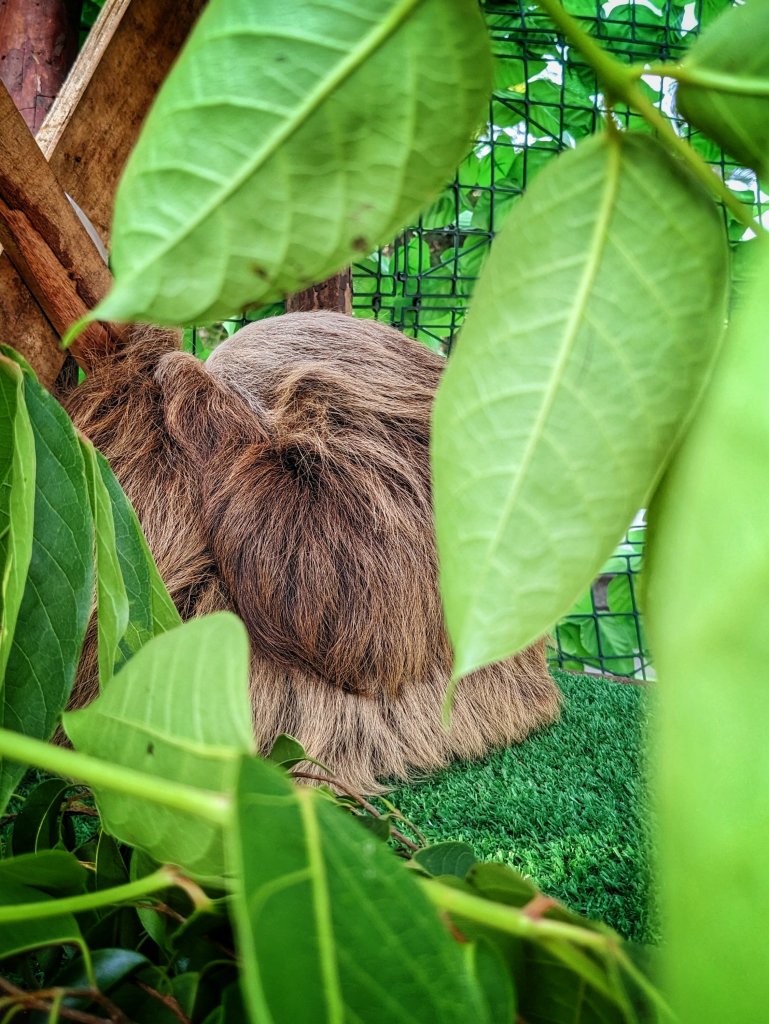
- Find, cut, and distribute new leaves of the right types for each sloth, ‘dressing’ each enclosure in a nice and natural manner
- Chop veggies for the PM feed
- Slothsitting
While working in close proximity to a sloth it is essential that we have as little contact as possible and always wear a surgical face mask. Sloths are very sensitive and can become humanised very quickly with too much contact, and with human breath being a very strong scent to a sloth they can become attached to humans quickly. We want to avoid them searching out humans so that they have the best chance possible of being released back into the wild.
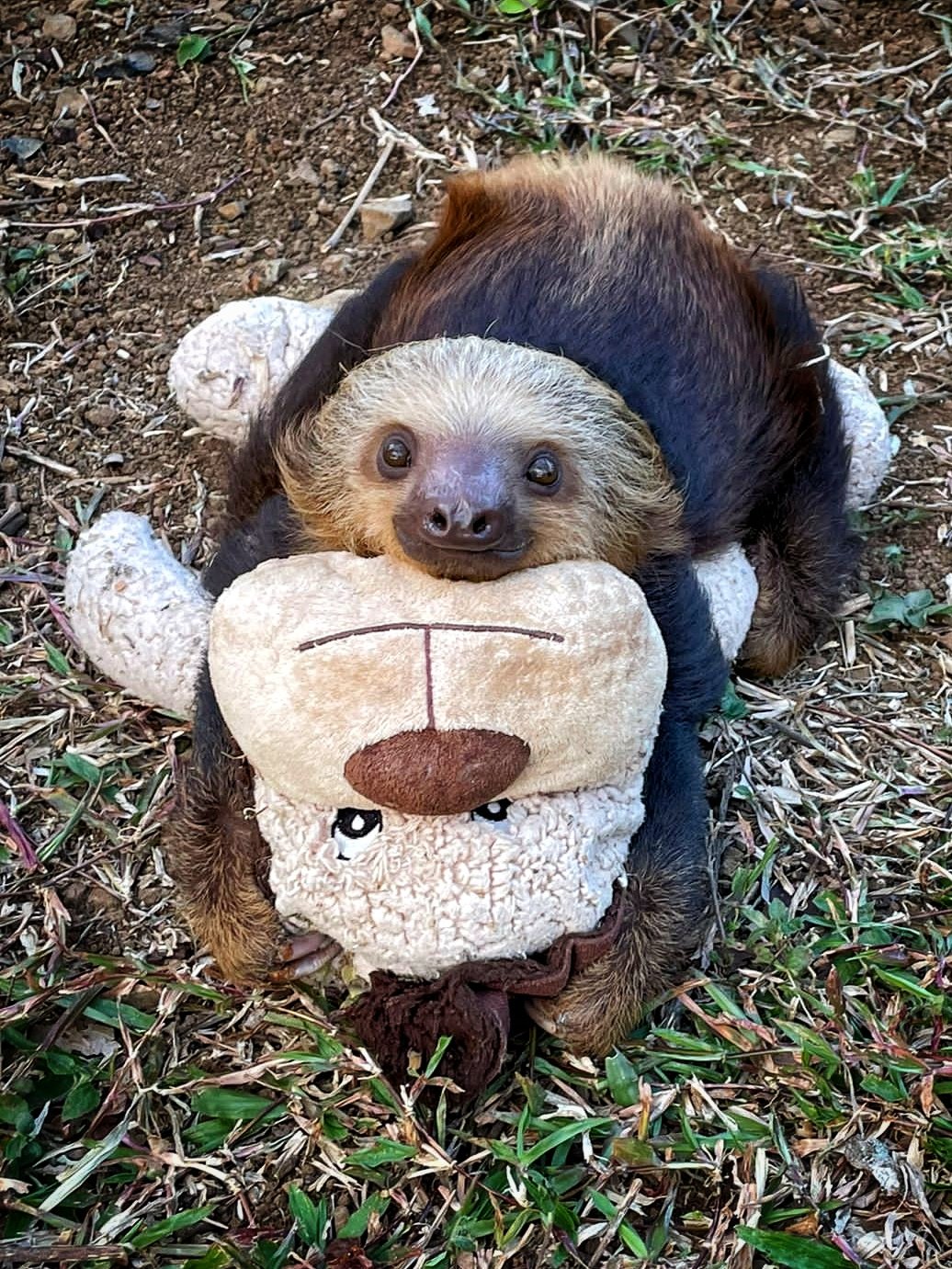
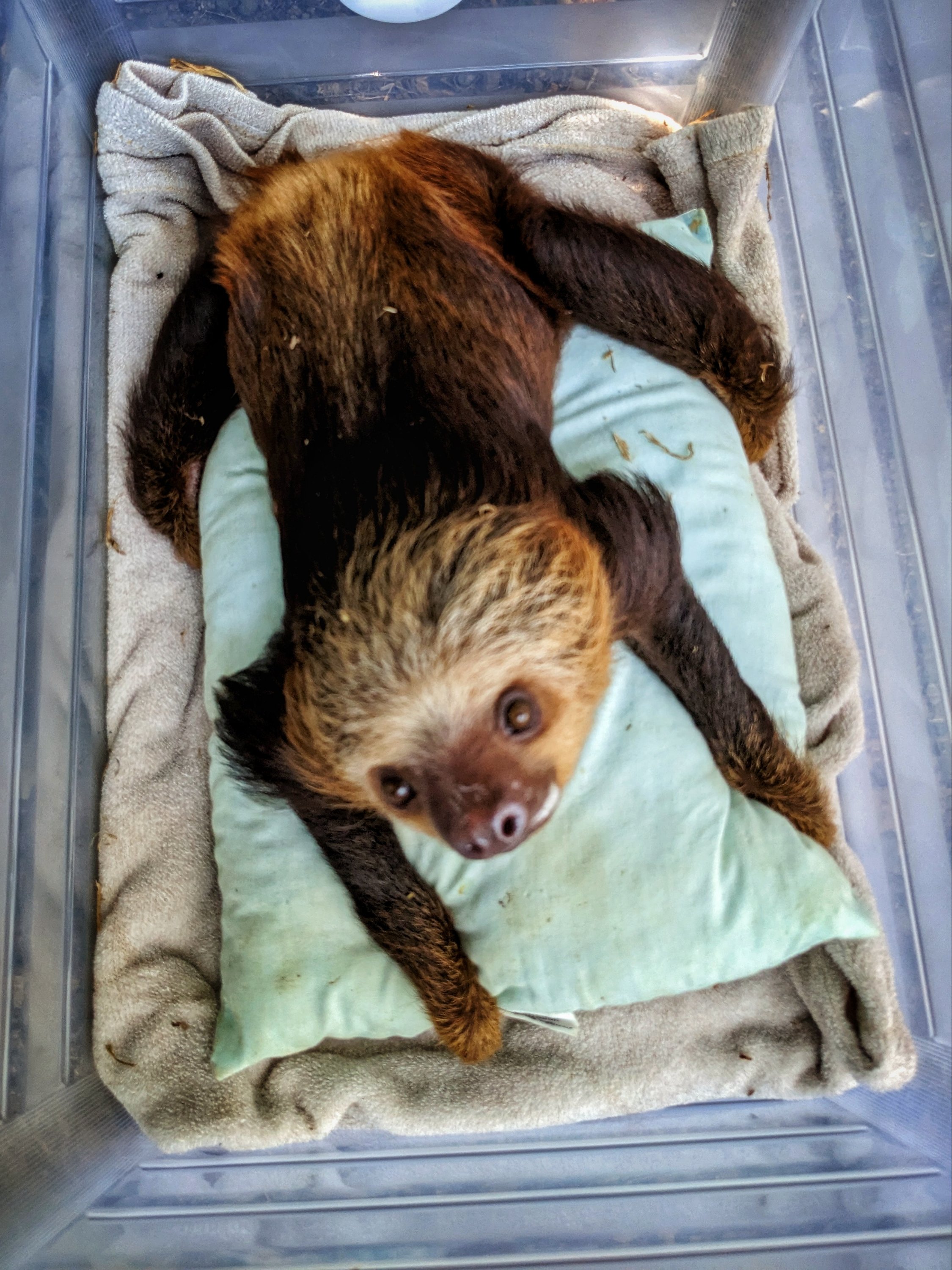
Of course this can be quite challenging to achieve as the baby sloths do need to be handled and do search out the comfort of a human as many of them had to be syringe fed with milk when they were brought in. As is the case with our new arrivals Forest and Bobby, both 3 toed sloths who arrived at the rescue center during the first few days of us being on the sloth team. Forest was around 3 weeks old when he arrived, sadly he was found with his mother who had died from toxic poisoning from the chemical runoff from a pineapple plantation. Luckily he showed no signs of poisoning and was placed in an incubator and began settling into his new environment and routine well. Bobby on the other hand was not so well when he arrived, found abandoned at approximately one week old and born prematurely with malabsorption and other problems he was very tiny and in a fragile state.
One week later
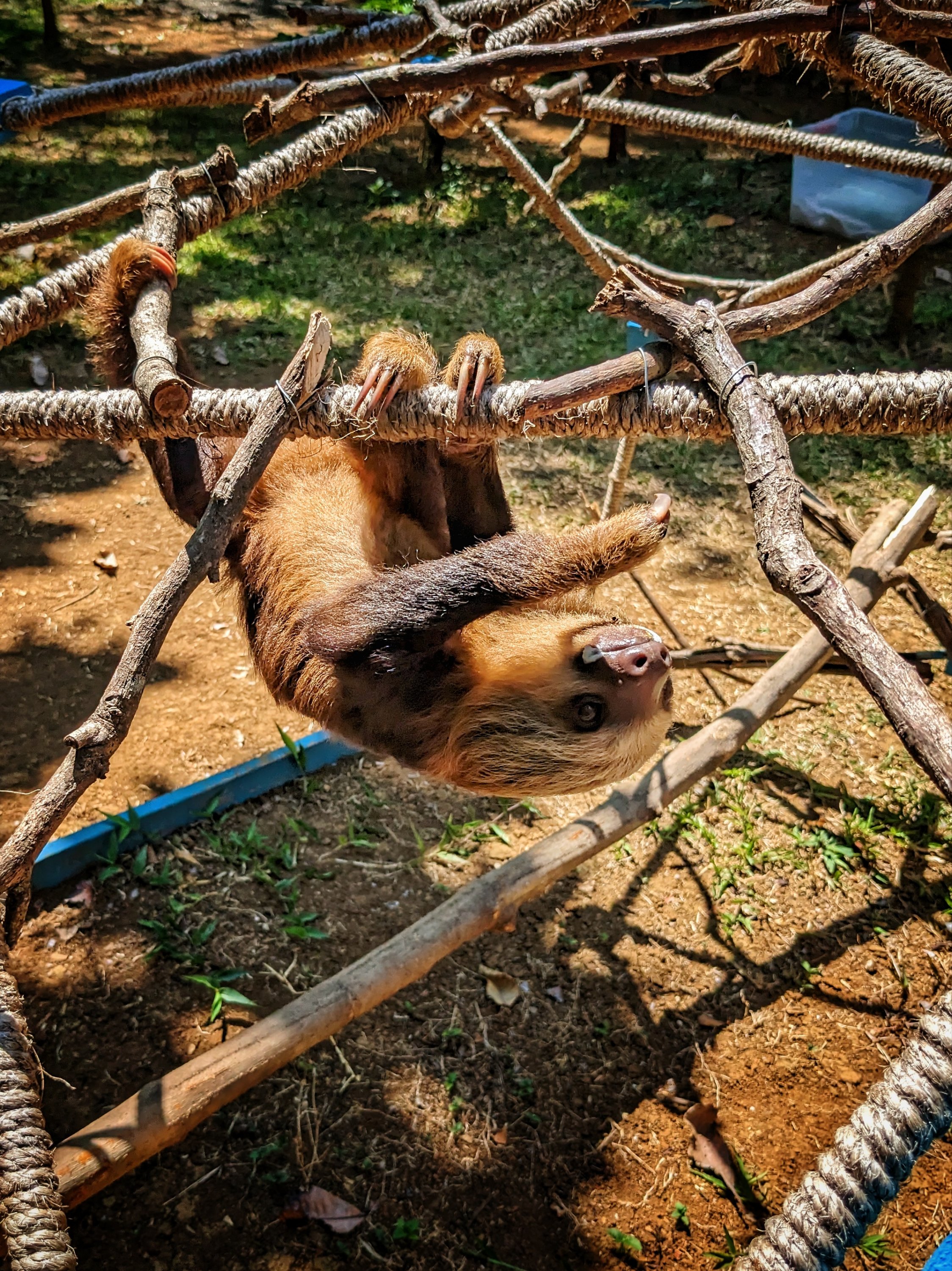
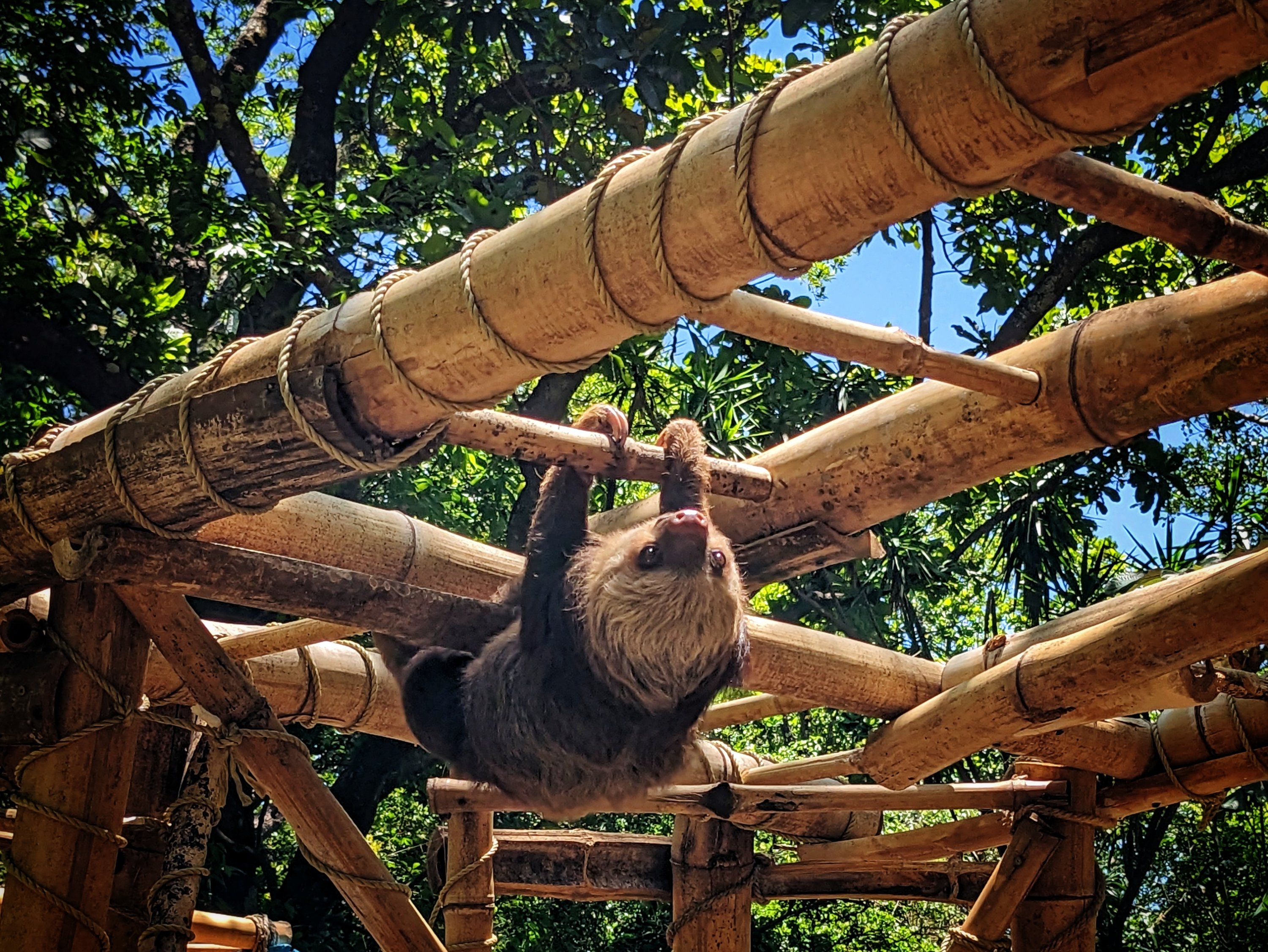
Saturday (one week in), we had some new changes to accommodate, as instructed by the chief vet. Burrito (small baby 2 toed sloth) was to graduate from the covered box in the hospital, to Merry’s indoor cage. Merry (adorable 3-toed sloth) will be put in her own tree outside during the daytime, but a hospital box at night (she is tiny!). Zane (a big, difficult baby 2-toed sloth) graduated from an indoor cage to a spare outdoor enclosure. This meant another clean/reset of the cages and to prepare them with fresh leaves, food basket and water bottle; the spare outdoor enclosure for Zane was initially empty.
Interestingly, sloths do not* drink water. They get all of their water from food and the leaves, branches with leaves on them are placed in water bottles to help keep them as fresh as possible.
*At least, that’s what we were told at the beginning of the week. During our stay we heard that very recently a sloth had been seen drinking water in the wild – this just emphasised how little is really known about sloths and how they live in the wild.
 Travel, Nature & Us
Leave a comment