
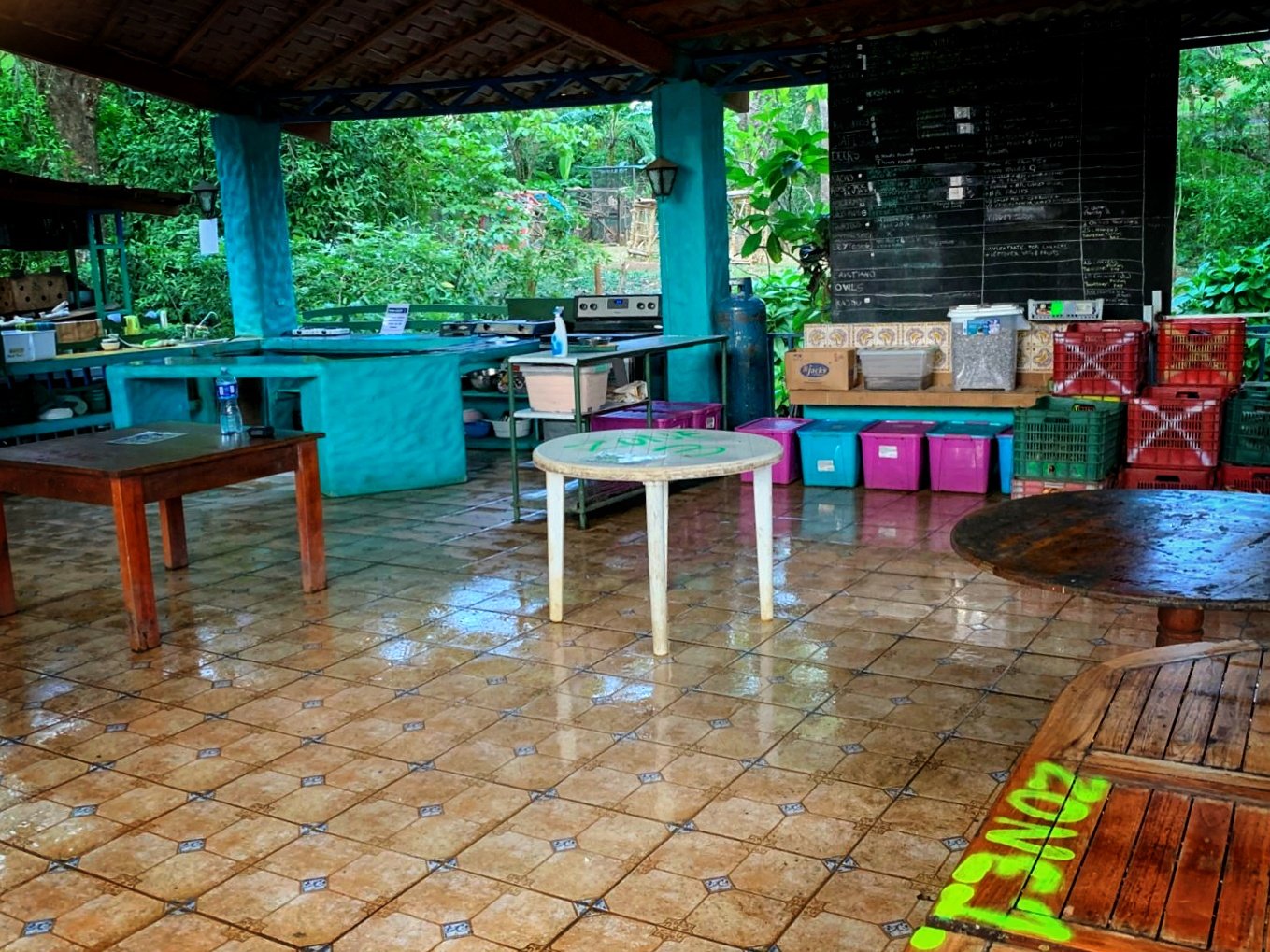
The morning of day two we’d been assigned to the Animal Team; Elizabeth to Zone 3 and Warwick to Zone 4. Work starts at 07:00 as the animals always come first! We met in the Animal Kitchen and began breakfast prep for our zones, this again involved a lot of chopping of fresh fruit and veggies, making sure everything was cut to the correct sizes and that foods such as yuca and sweet potato are lightly cooked to remove the toxins that can be poisonous to some of the animals. Once everything is prepared, powdered vitamins are added to make sure none of the animals are missing out on any vital nutrients. We then spent time preparing ‘enrichment’ for all the animals in our zones which gives them activity and interest when trying to “hunt” for their food. And then it was time for the humans to have breakfast and coffee!
Now it was feeding and cleaning time. Elizabeth was taking care of Lil’Dahma the Racoon first, and this morning he was just as playful as the day before; he just loves attention! After playing, feeding and cleaning, Elizabeth was finally able to extract herself and move on with the team to care for the Coatis, of which the Rescue Center has three residents. These are tropical racoons of a reddish brown colour with dark faces and long tails and are extremely sociable, especially Nina who loves to have her back scratched.
Next it was the turn of Jack Jack and Rose the White-Faced (Capuchin) Monkeys. We really have to watch out when feeding and cleaning these overactive primates: Jack Jack is well known for snatching anything edible or shiny and can sometimes be in an aggressive mood to defend his territory. He is not so keen on women but is always happy when there is a man on the cleaning team. With this in mind we cannot enter their enclosure to feed and clean so we must use the containment area – but even here Jack Jack will reach through and slip anything from your pocket!
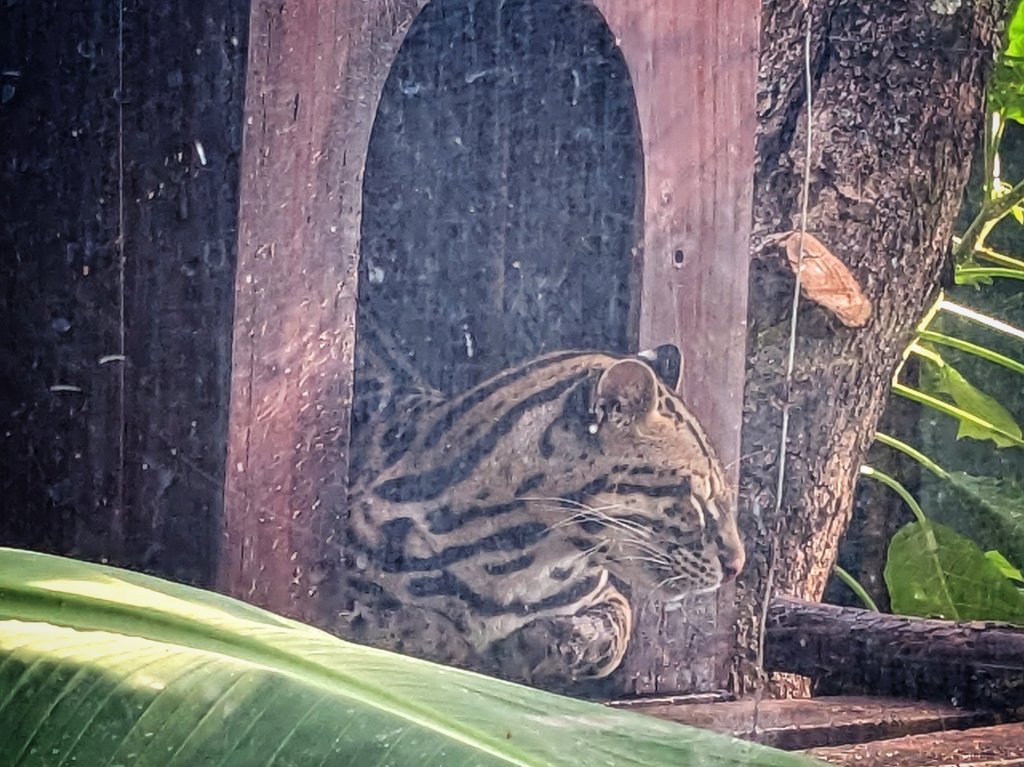
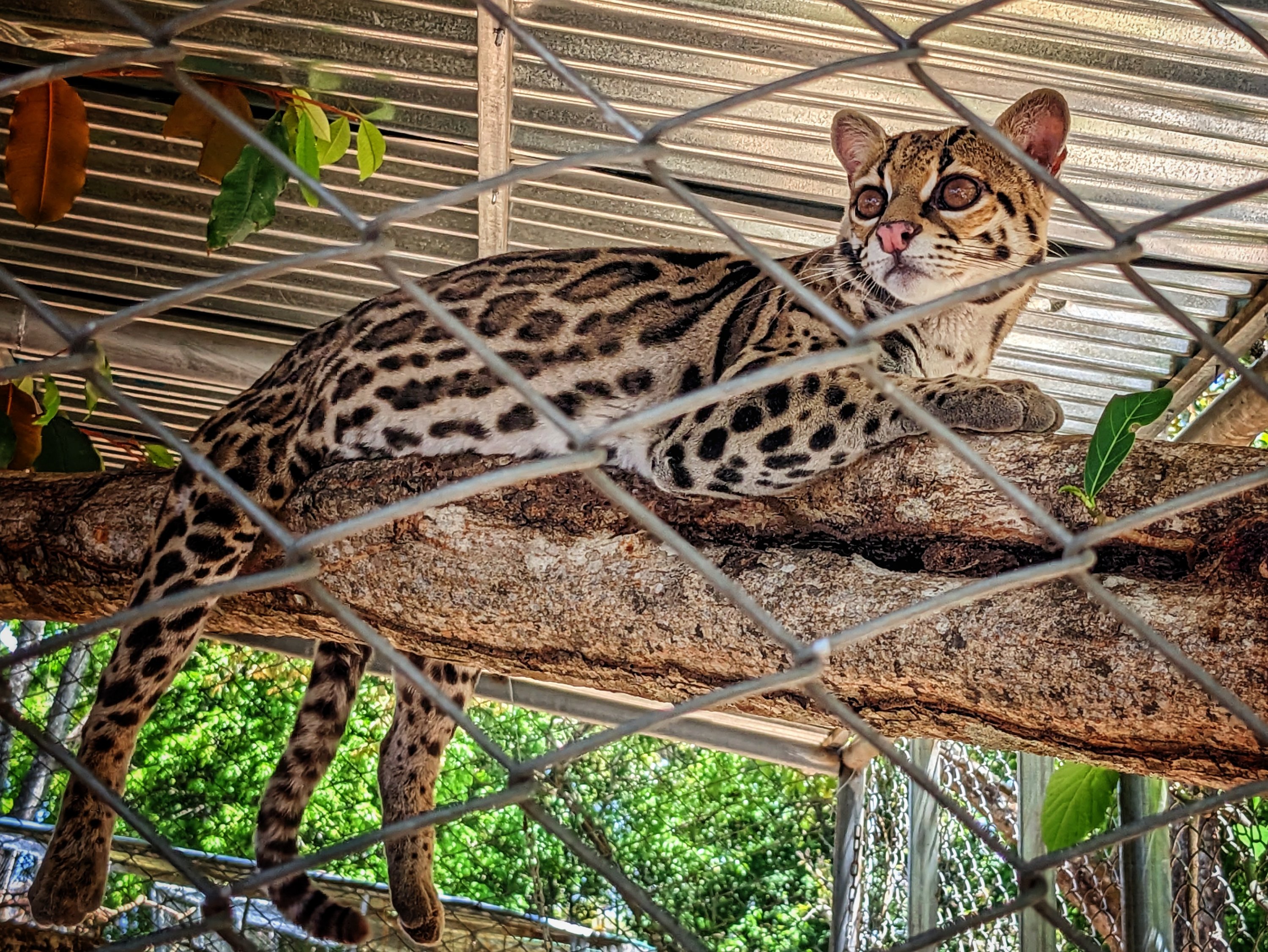
It was then the turn of the Ocelots. Now these guys are beautiful and look so cuddly but they are not, they are true Big Cats in smaller bodies! So again we have to use the containment area for cleaning and feeding as we cannot be in the same space as them. There are two resident Ocelots both male, Ronaldinio and Christiano, and as they are both male they have separate enclosures. Ocelots are nocturnal and are fed on the night shift, so no feeding for Elizabeth to do this morning, just cleaning up the left overs of raw chicken, emptying the litter trays, and giving clean water.
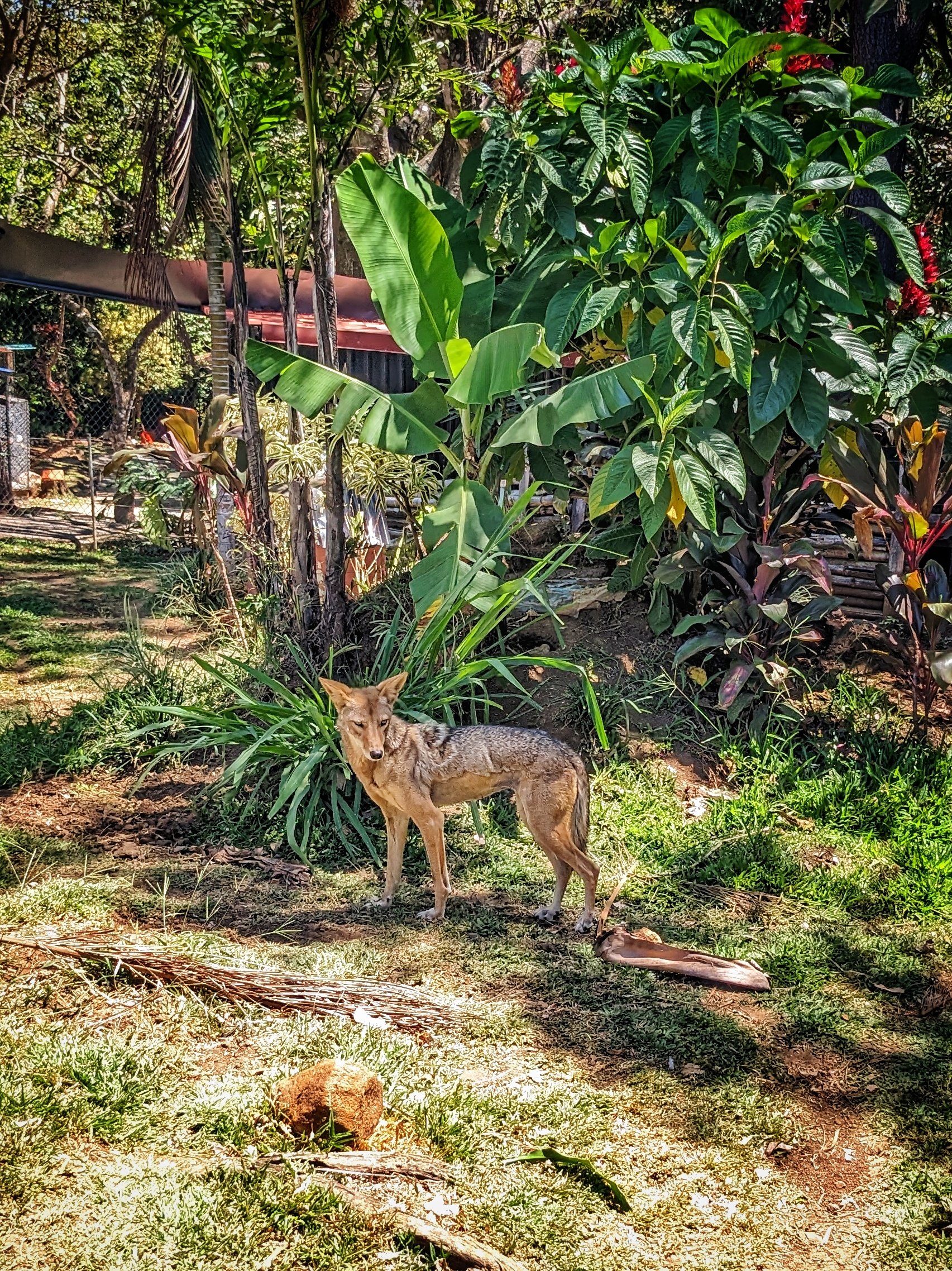
Lili is the final resident in Zone 3 and is a Coyote which are widely distributed throughout Costa Rica. Lili is very nervous of humans so we are able to be with her in her enclosure as she always keeps her distance. It was a quick clean up of last night’s raw chicken leftovers, a change of water and some fresh veggies for Lili (she also gets her meat during the night shift). We try to be as quiet and as quick as possible with Lili, to avoid making her anxious.
Meanwhile, Warwick was working in Zone 3. This started with cleaning the turtles ‘ponds’ by draining most of the water and brushing all around. Sometimes a turtle might come out that needs a little scrub itself, but that wasn’t needed today. Then the food is placed on and around the rocks, and the water refilled.
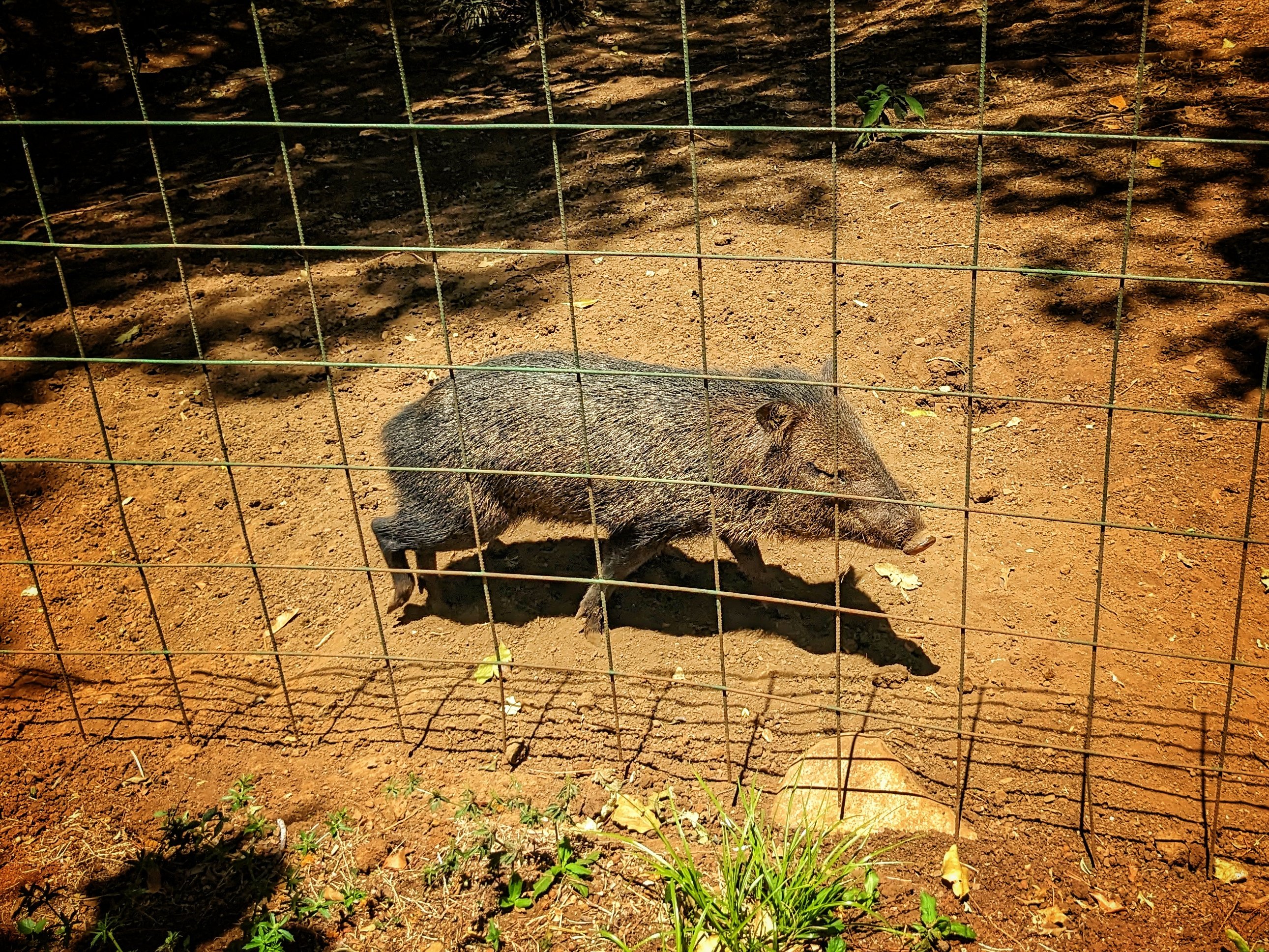
Then it was on to the pigs, more accurately the Peccaries. These wild pigs are found in the tropical rainforests in Costa Rica; they are a type of small wild pig that lives in herds that can extend up to 30. They can be very loud and aggressive when fighting over water or food…
We first took care of a new pig who currently has an enclosure to himself, whilst he recovers better from an injury, and then (after castration) he will be introduced to the main group. Again the main duties were to clean up, and replace with new food. He is very docile and we could walk around with him without any problems. The key here was to give him his food first… Then his water bottle needed re-fixing to a post, as he likes to chase it around his enclosure – something we kept in mind when preparing his ‘enrichment’ later.
For the main group of a number of Peccaries we kept only to the containment area, to remove the old food (everything goes to a large compost heap), wash out the food boxes, and replace with fresh fruit and vegetables. These pigs are too aggressive to work closely with, and just before we arrived, they escaped (due to a broken gate) – causing some additional issues for the teams to gather them back in.
Then it was onto the spider monkeys. We DEFINITELY do not go into that enclosure, as Tarzan, Bruce, and ‘the other one’ (every animal has a name and we’re still learning them), would not make you feel welcome… So again we worked in the containment area, and not too close to the cage sides. On this day we were asked to try to isolate one of the monkeys for the vet to get a closer look at a recovering injury. However, he had other ideas and was able to quickly grab some food and jump back into the main enclosure before the door could be safely closed. He was indeed a cheeky monkey that morning, and the vet had to settle with a photo from further away.
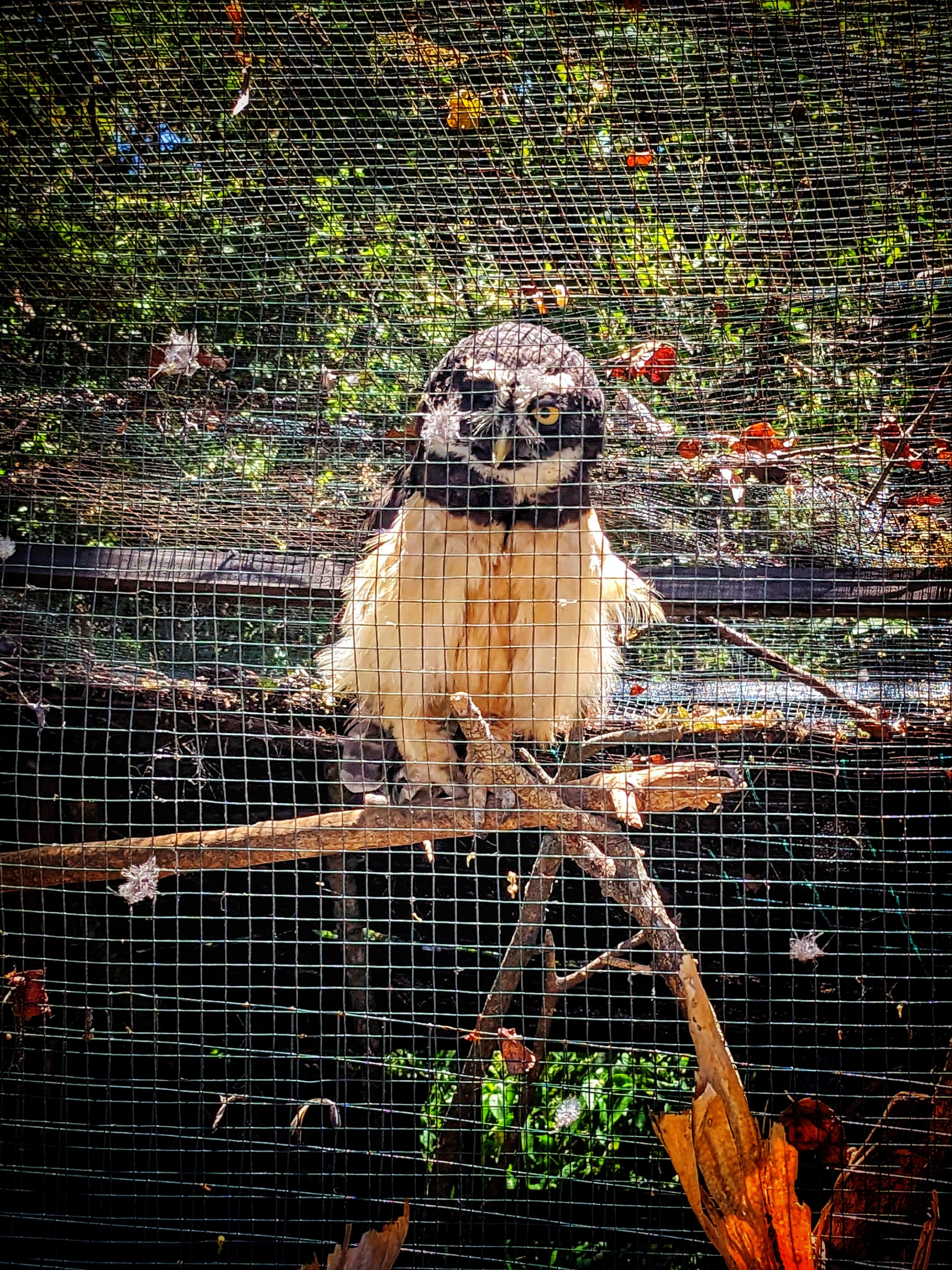
Also during the morning, Warwick went into the owl enclosure (armed with a large brush) to remove the old parts of chicken that had been fed to the Owls the night before. The three large Spectacled Owls were no problem, and just watched very intently (especially the one eyed owl), that Warwick was doing everything correctly.
After all the animals are fed, watered and their enclosures are cleaned, it’s back to the kitchen to prep vegetables for the afternoon feeds. Once everything is done there is a little time to relax before lunch is served at 12:00, the daily update meeting for everyone at 13:30…..and then in the afternoon we joined the Sloth Team!
Sadly many of the animals in Zones 3 & 4 are not able to be released. They have either been kept as pets for too long (5yrs+), have injuries or medical conditions which need medication or a special diet or have refused to be released (Lil’Dahma refused 3 times!!!), which means they would not survive in the wild. The main aim of the rescue center is always to ‘Rescue, Rehabilitate and Release’, but sadly this is not always possible. So the rescue center provides the best possible alternative for these animals, they are all well cared for and have a home here for life.


 Travel, Nature & Us
Leave a comment